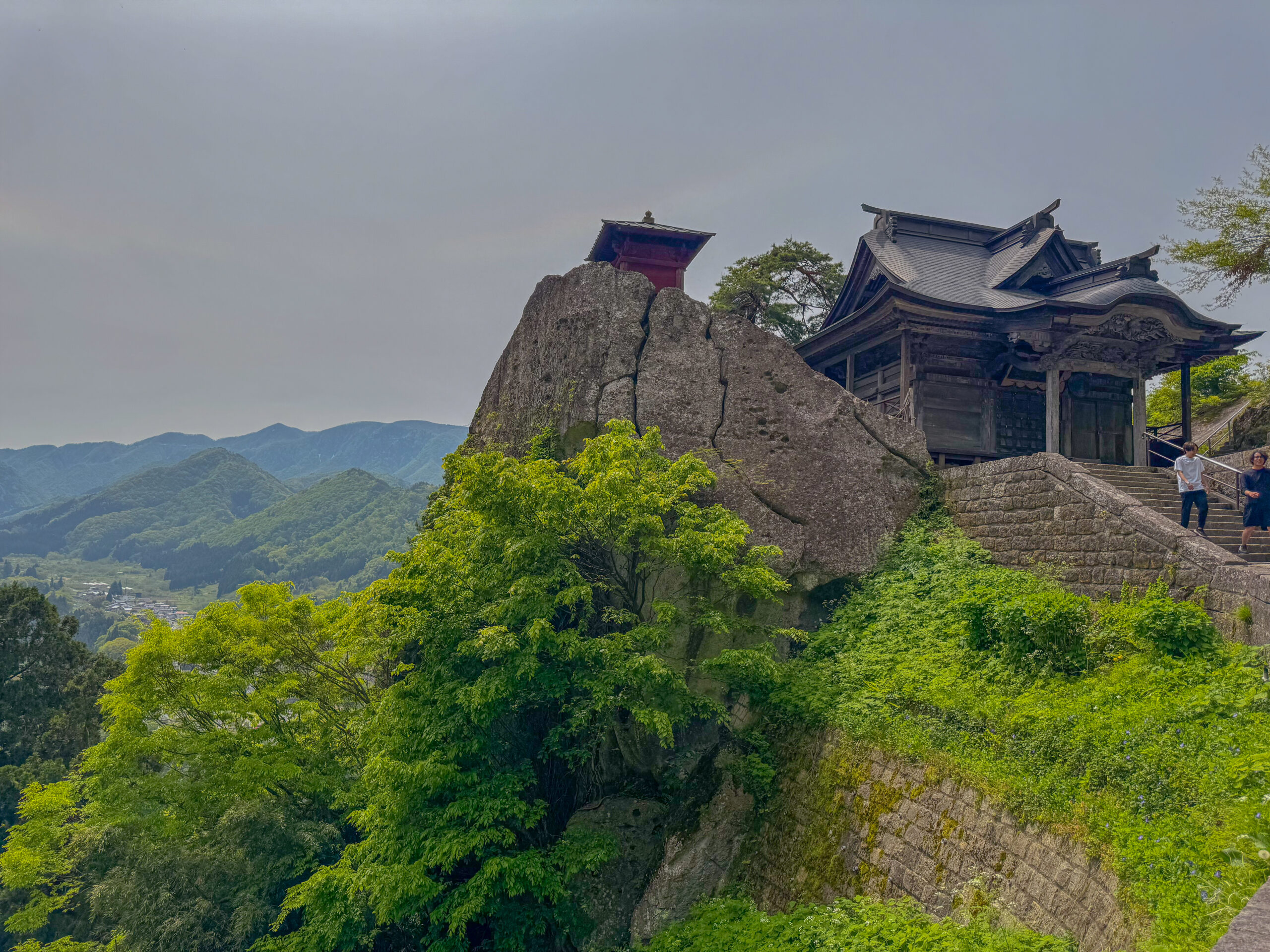
Perched dramatically on the steep rock faces of Yamagata Prefecture is Yamadera (山寺). Yamadera, translating to “mountain temple” in Japanese and officially named Hojusan Risshakuji, is one of northern Japan’s most historic and spiritually revered mountain temples. If you are looking to step off the heavily worn Golden Route, taking a Yamadera day trip is a grounded, peaceful, and deeply rewarding way to experience the natural beauty and deep history of Tohoku.
The History of Hojusan Risshakuji
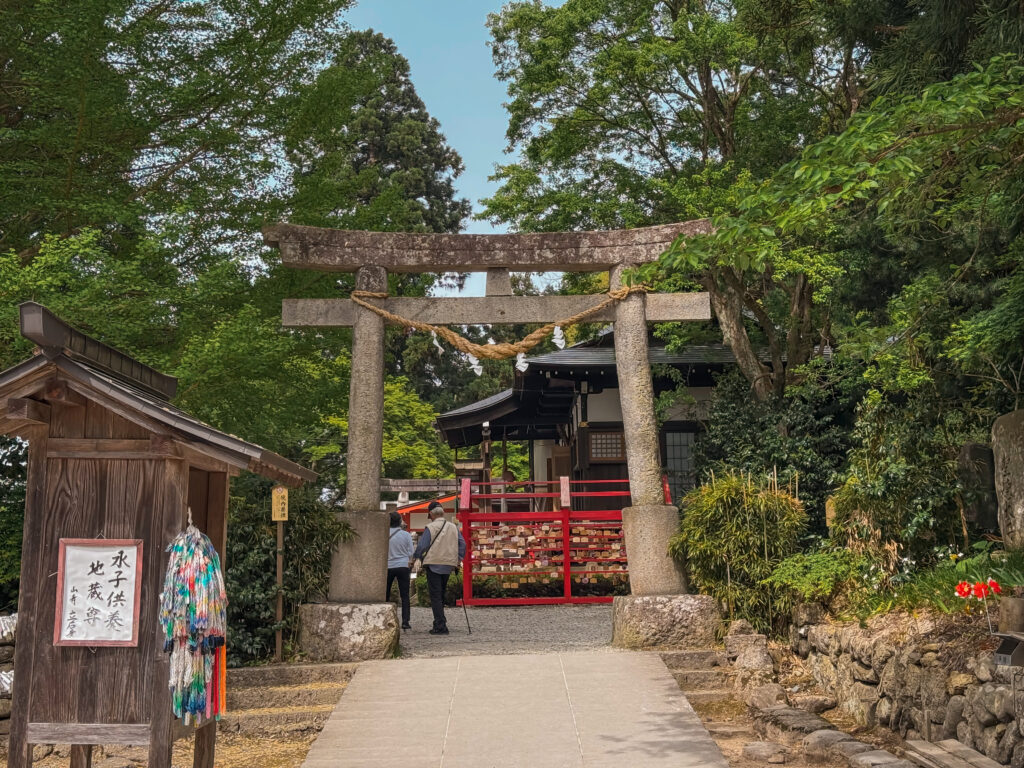
Long before Yamadera became a cherished stop for modern travelers, it served as a remote spiritual outpost on Japan’s northern frontier. Founded in 860 AD by the high-ranking Tendai Buddhist monk Jikaku Daishi (Ennin), this sacred site has drawn pilgrims, monks, and travelers for well over a thousand years. It gained lasting literary fame in 1689 when the legendary Edo-period poet Matsuo Basho climbed these grounds while writing The Narrow Road to the Deep North, composing his timeless haiku on the profound stillness of the mountain forest.
The Journey Up: Cedar Trees, Stone Steps, and Sacred History
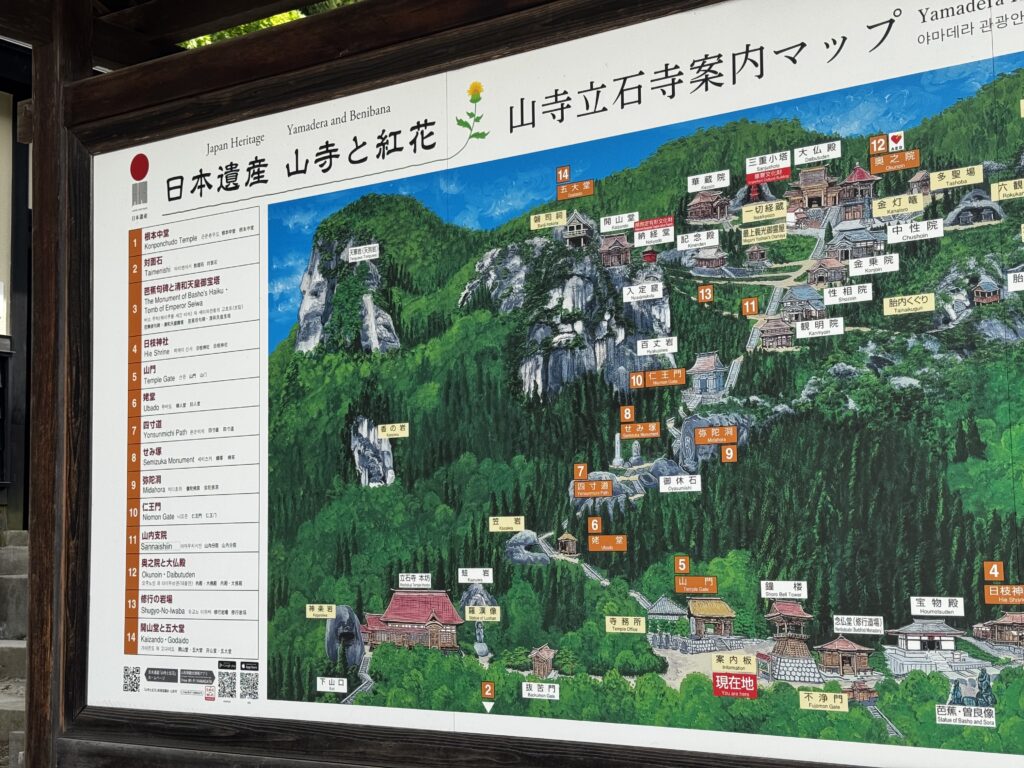
Your Yamadera day trip centers around the sacred ascent up the mountainside, winding through ancient trees and historic structures.
First Impressions at Konponchudo
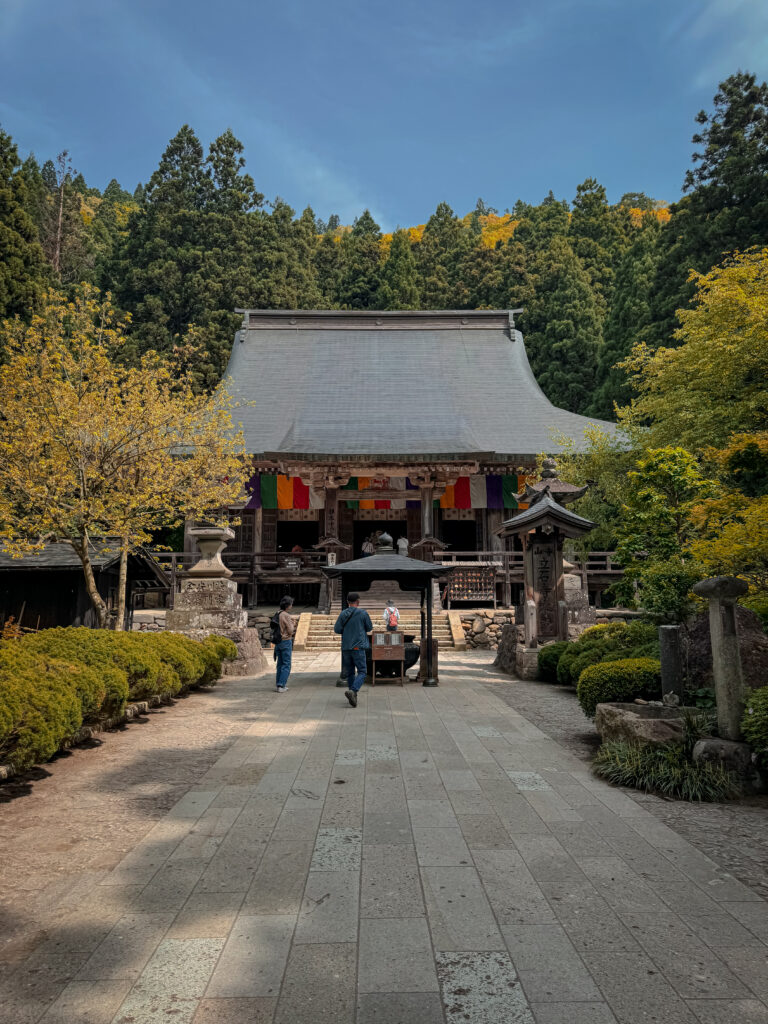
After crossing the red Hojubashi Bridge from the station, your first stop is Konponchudo, the temple’s main hall. Inside burns the Fudou no Tomoshibi (the Eternal Flame), a sacred flame brought from Mount Hiei in Kyoto that has been burning continuously for over 1,100 years. Outside the hall, wafting smoke from the big incense burner (jokoro) over yourself is a customary ritual for health and clarity before starting the trek.
The Climb & Basho’s Footsteps
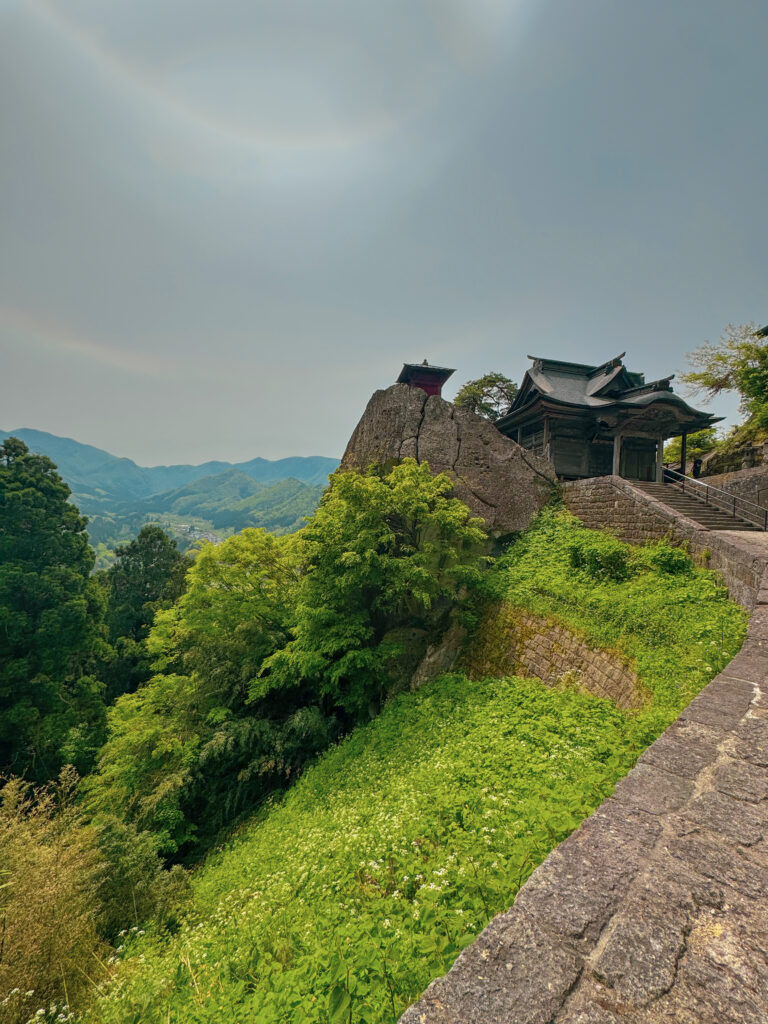
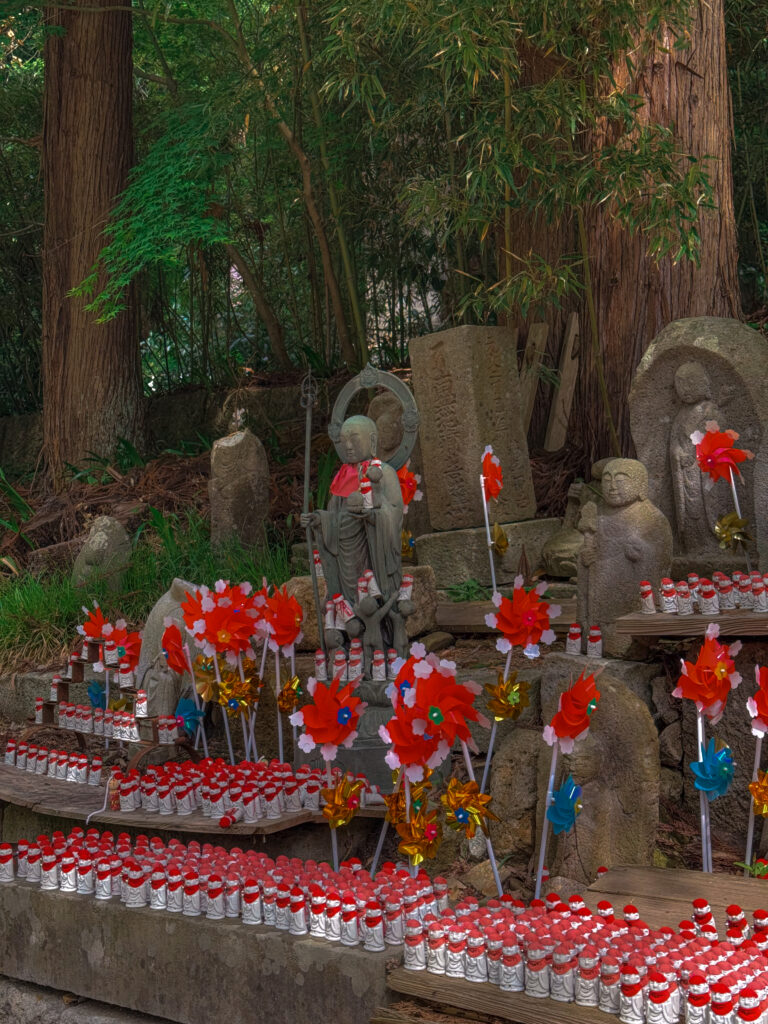
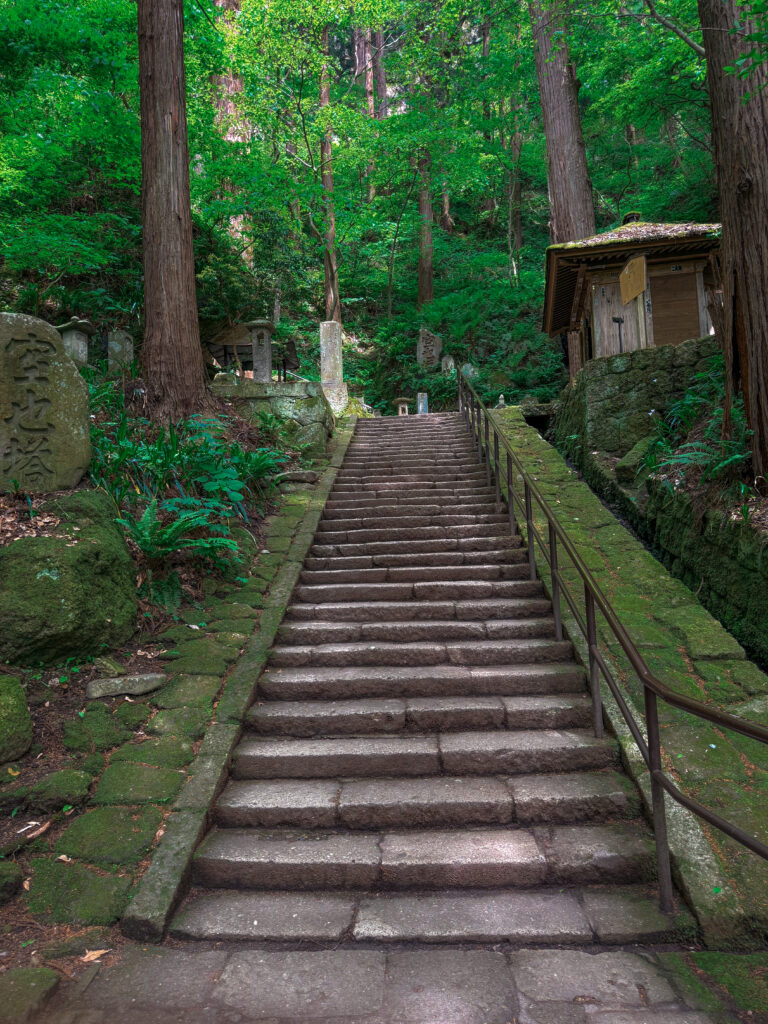
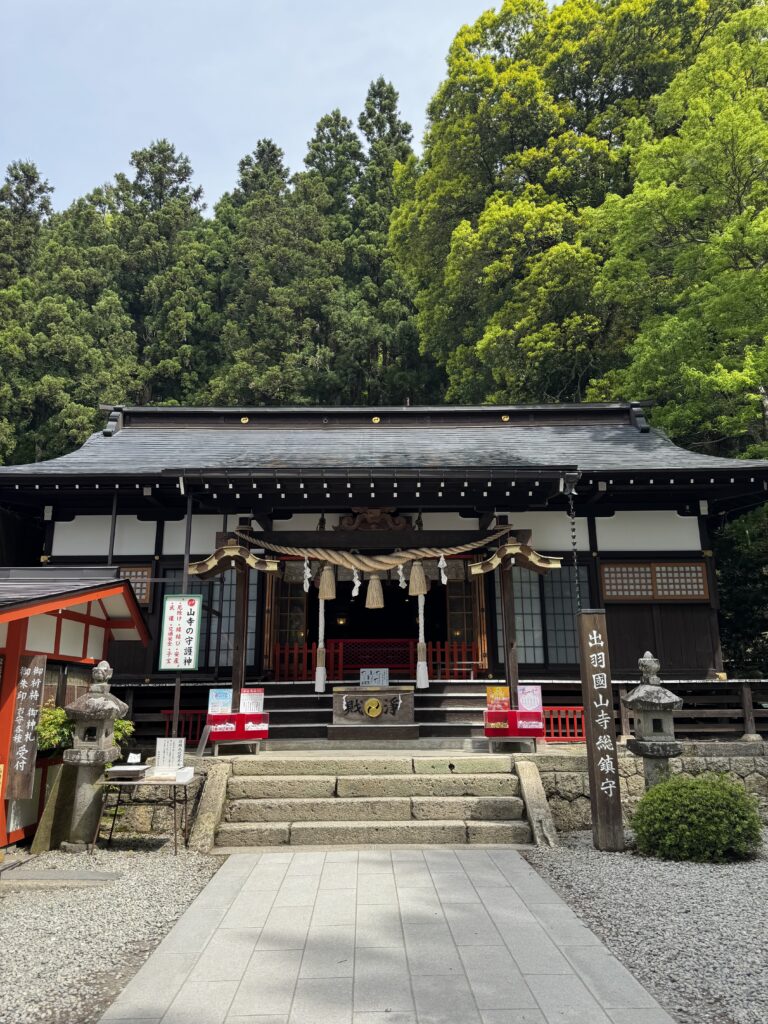
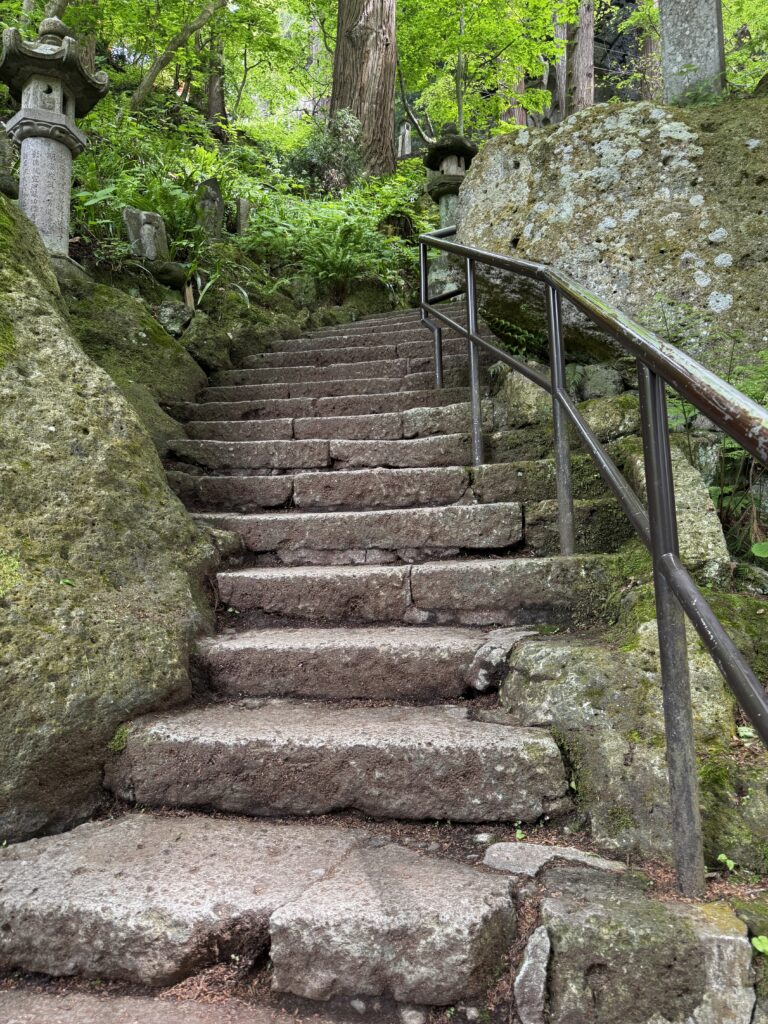
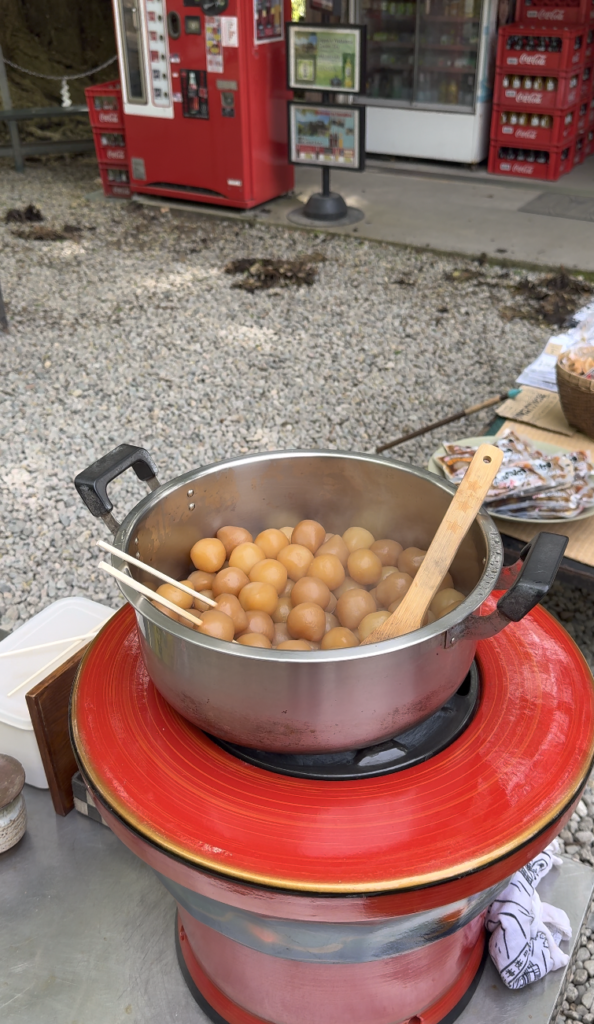
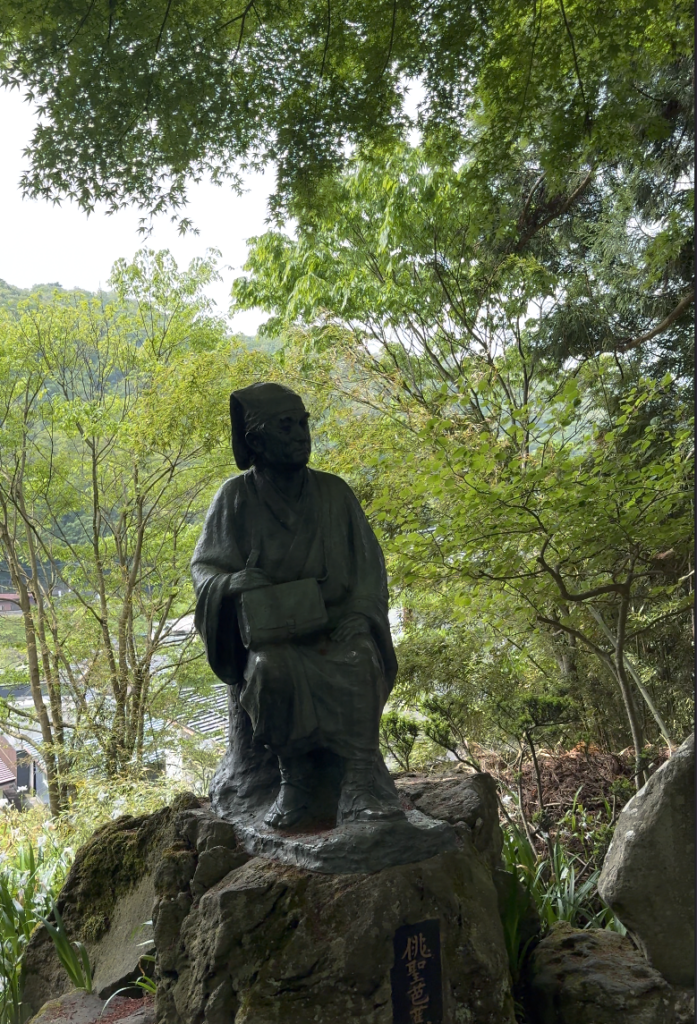
Just past the main gate (where you pay a 500 yen entry fee), you will see a bronze statue of Matsuo Basho. The poet climbed these exact rocks during his journey north, inspired by the deep silence of the forest sinking straight into the stone.
Before the trek all the way up, grab a skewer of hot Chikara Konnyaku (soy-simmered power konjac on a stick). It is warm, savory, and gives you that extra bit of fuel to reach the top.
From there, the trail turns into a winding staircase of 1015 stone steps carved directly through towering cedars and giant, mossy rock faces. In Tendai tradition, this physical effort is symbolic: with every step you take up the mountain, you leave behind a little bit of your worldly worries.
Godaido: Views from the Top
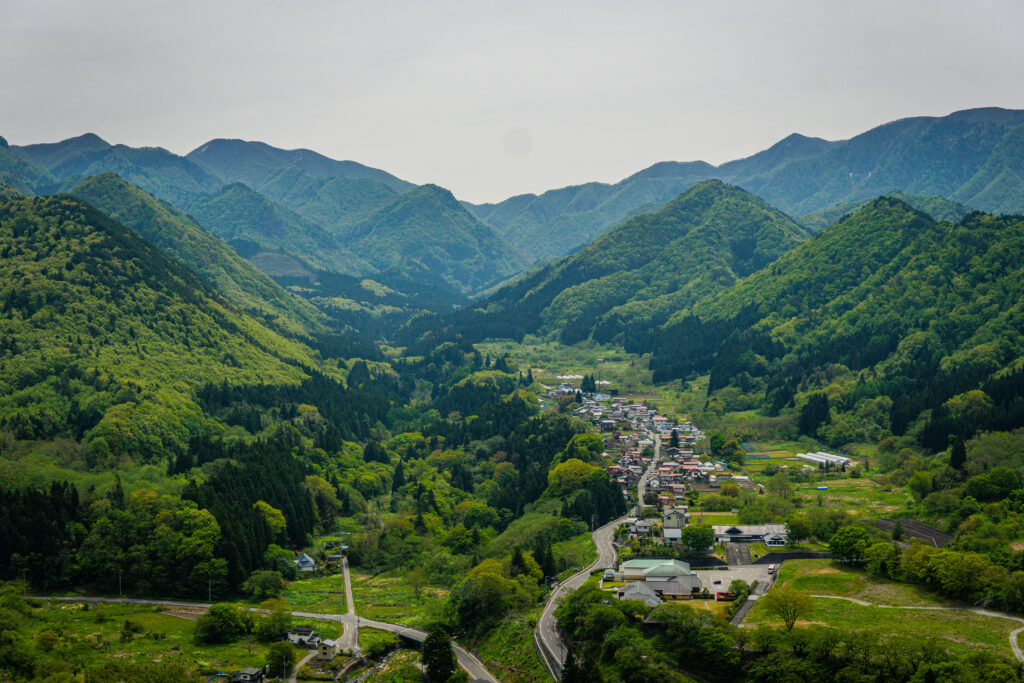
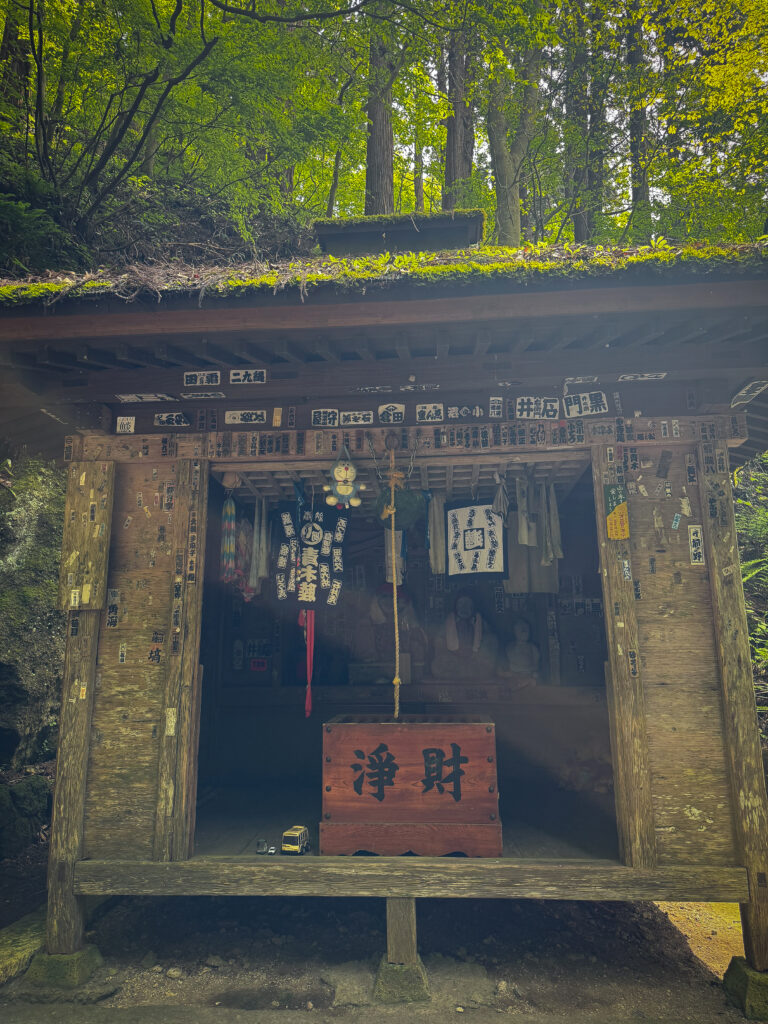
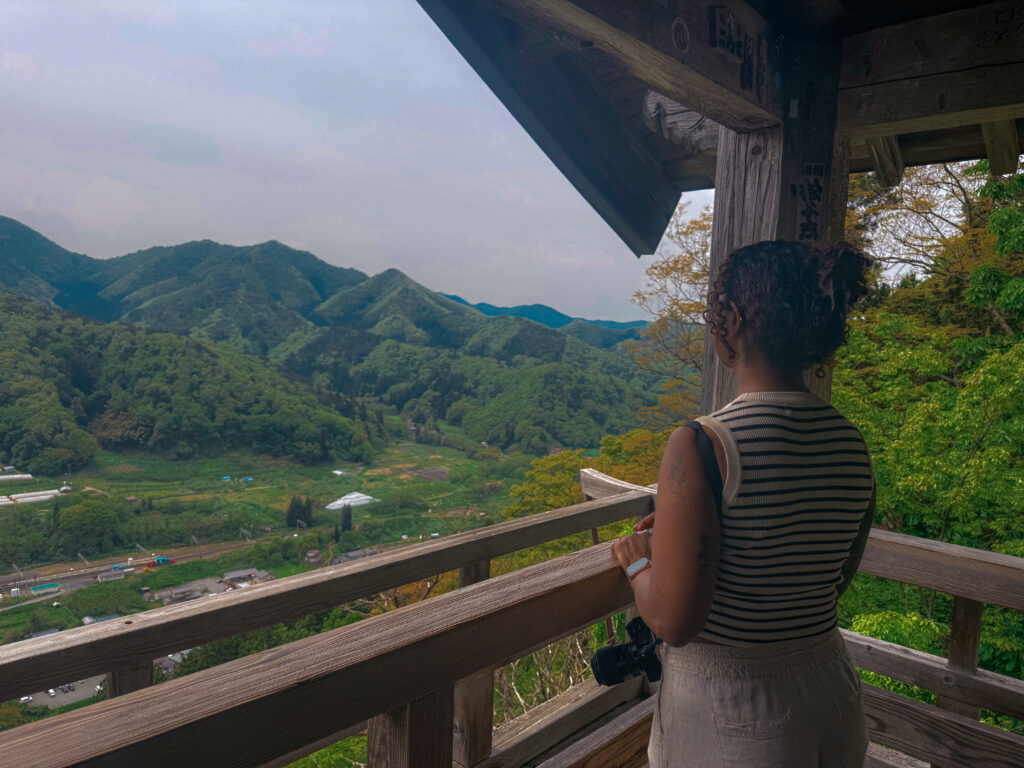
Near the summit, you will pass tiny wooden halls perched right on the cliff edge. The highlight of any Yamadera day trip sits at Godaido, an open wooden observation deck hanging over the mountainside. Stepping out onto the wooden planks gives you a wide, uninterrupted view of the entire valley floor and mountains stretching out below. Just be aware that during high peak seasons, the time you may spend at Godaido will be limited, to accommodate the high volume of visitors.
Lunch at Enzou: Comforting Mountain Cuisine
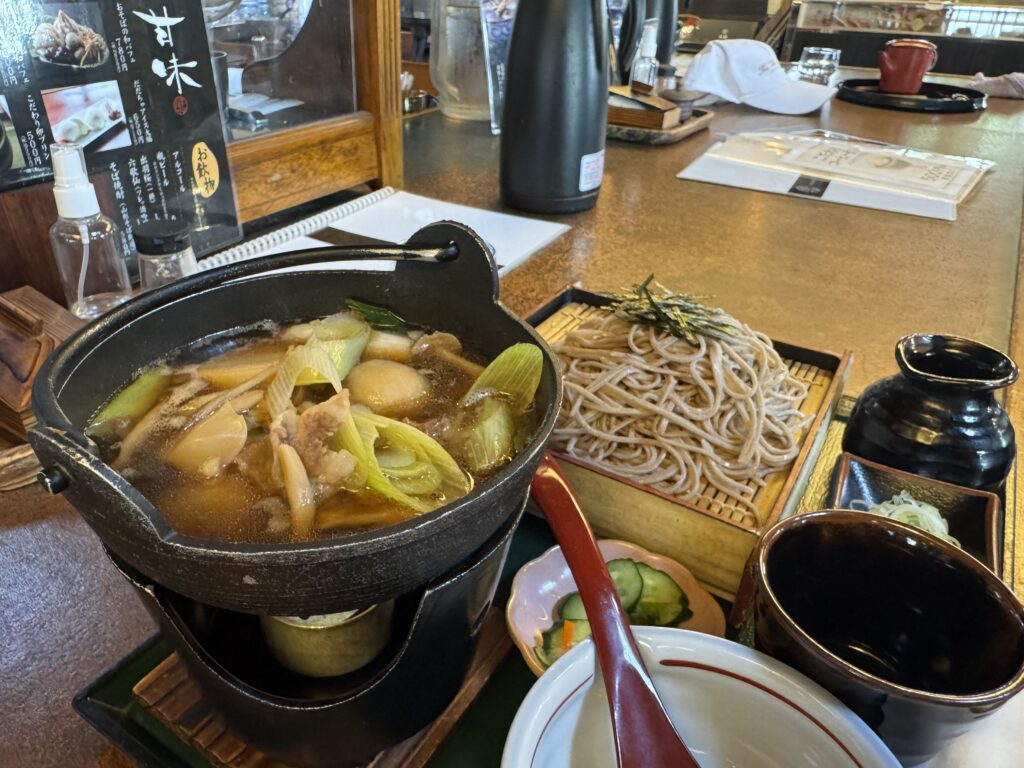
Once you make your way back down the mountain, you will find a handful of local restaurants scattered around the base town. While you have a few choices nearby, I highly recommend going to Enzou (焰藏 山寺本店). Not only is the food soooo comforting, but the staff working there were so sweet and welcoming, making the whole meal feel extra special after a day of exploring.
While they serve comforting classics like Chuka Soba (中華そば / Chinese-style soy ramen), regional ramen, and a variety of sweet local desserts, their set meals are the real standout. For their signature stew, they offer both a traditional beef option and a vegetable version. I went with the non-beef option packed with seasonal vegetables in the Yamagata Imoni Nabe Zaru Soba (山形芋煮鍋ざるそば) set, which brings together two of the region’s absolute best comfort foods:
Imoni Nabe: A hot, deeply savory pot of regional stew packed with tender taro root, konjac, scallions, and fresh seasonal vegetables simmered in a rich broth.
Zaru Soba: Chilled, firm buckwheat noodles served on a bamboo mat, meant for dipping into a savory sauce.
Alternating between a hot bite of rich taro and seasonal vegetable stew and a soothing dip of chilled soba is pretty much the ultimate way to recharge your legs during your Yamadera day trip.
Taking it Slow in the Base Town
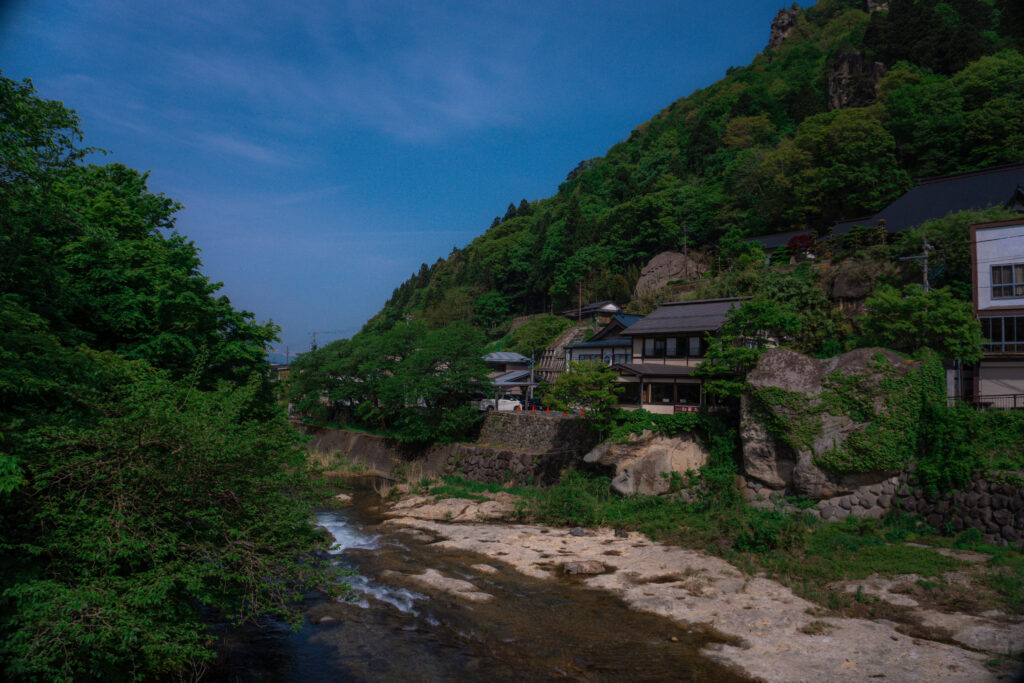
Before hopping back on the train to wrap up your Yamadera day trip, take your time wandering through the quiet town down along the river:
Local Treats: Grab a soft-serve ice cream made with regional cherries or La France pears from one of the family-run shops near the bridge.
Handicrafts: Check out the small artisan shops selling handmade wooden crafts native to Yamagata.
River Walk: Take a short stroll along the river bank. Looking back up at the tiny wooden structures perched high up on the cliffs where you were just standing a couple of hours earlier is such a great way to close out the trip!
Yes, You Do Deserve a Sweet Treat
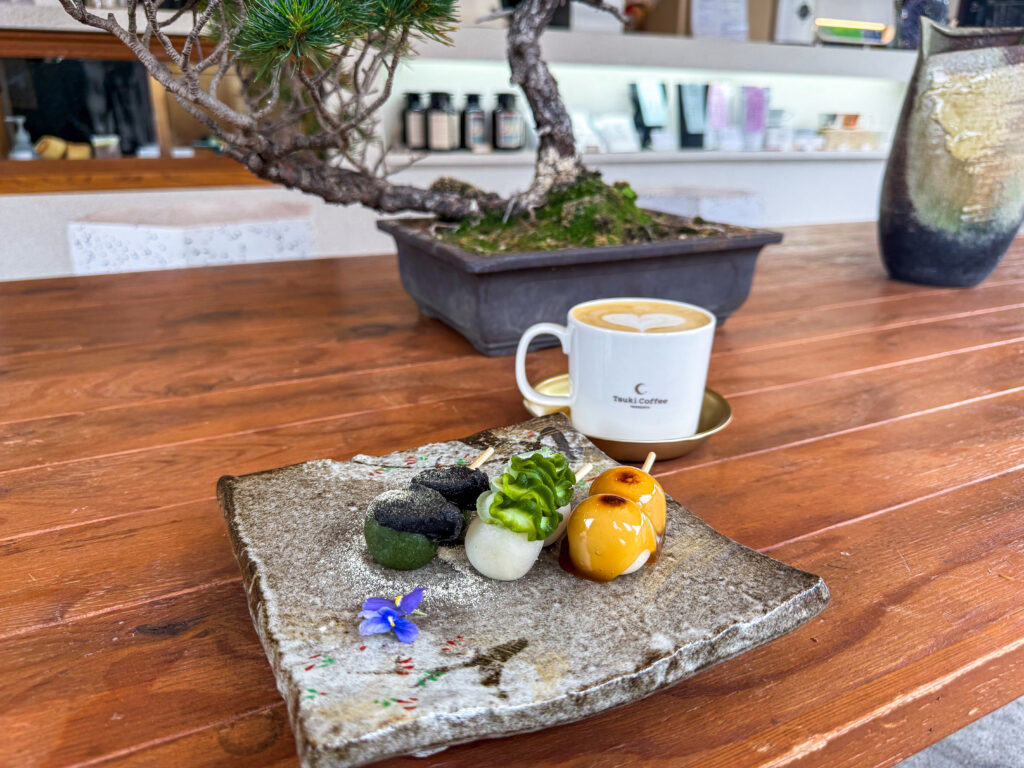
If you need a coffee fix or just a place to sit for a minute while you’re walking around Yamadera, Tsuki Coffee is worth dropping into. It has a super relaxed, clean feel that’s a nice change of pace from the more traditional spots nearby.
Get the set of three dango with a hot coffee, or any drink of your choice. Having the chewy, slightly sweet rice cakes alongside a really well-made espresso sounds like a weird mix on paper, but for me? It works perfectly. It’s quiet, thoughtfully designed, and the staff is friendly. The perfect place to treat yourself and reset before heading to your next stop in town.
How to Get There: Yamadera Day Trip from Tokyo
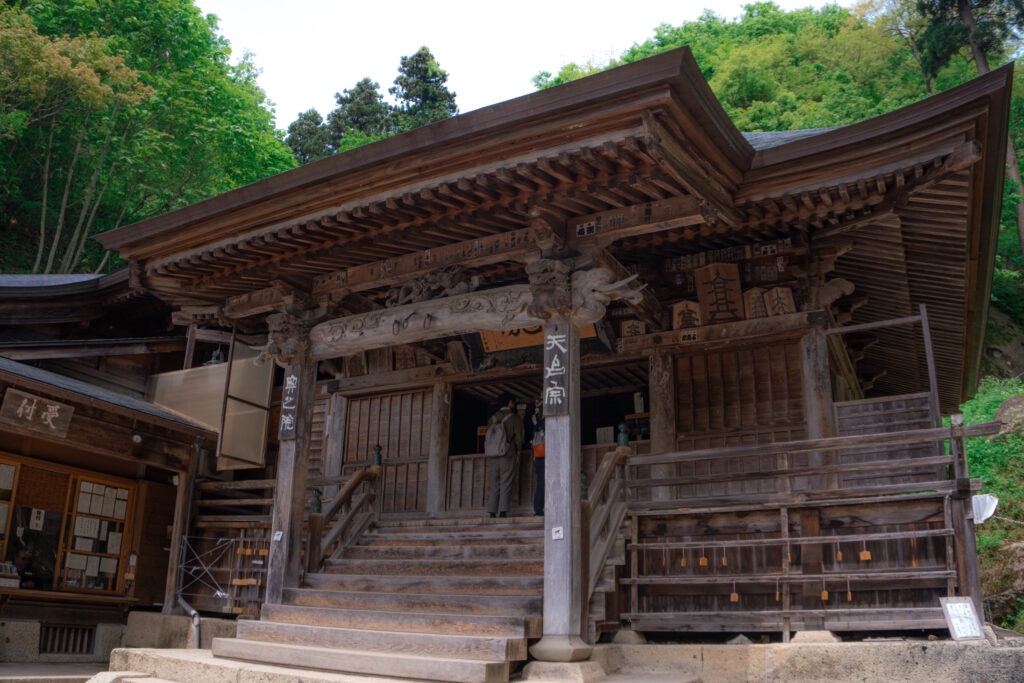
Planning a Yamadera day trip from Tokyo is remarkably simple and offers really peaceful countryside views. You have two main train options (both totaling around 3 hours) depending on which departure time fits your morning best:
Via Yamagata Station: Take the JR Yamagata Shinkansen (Tsubasa) from Tokyo to Yamagata Station (~2.5 hours), then transfer to the local JR Senzan Line to Yamadera Station (~20 mins).
Via Sendai Station: Take the JR Tohoku Shinkansen (Hayabusa or Yamabiko) from Tokyo to Sendai Station (~1.5 hours), then transfer to the JR Senzan Line to Yamadera Station ( ~1 hour 10 mins).
Luggage Tip: If you have large luggage, drop them in the coin lockers at Yamadera Station so you’re not lugging them all over.
What to Wear and Bring
For visiting Yamadera in the spring, summer, or autumn, standard walking shoes or lightweight hiking boots will do the trick. If you go during winter, the snow and ice make the steps pretty slick, so you will definitely want proper winter boots or good quality insulated hiking boots.
Make sure to bring plenty of cash and small coins. You’ll need it for the temple entrance fee, plus coins if you plan on buying any charms, souvenirs, or making traditional offerings.
Lastly, grab a bottle of water before you start heading up. Staying hydrated is key, and while there are vending machines near the top, you’ll be paying roughly double the price for a drink.
My Thoughts on Why Yamadera Belongs on Your Itinerary
A Yamadera day trip isn’t just about checking off a tourist spot or getting a good workout on a thousand stone steps. It’s about slowing down enough to feel the weight of over eleven centuries of history carved directly into the mountain face. From the quiet morning cedar trail to a hot bowl of imoni at Enzou, it offers a window into Tohoku that stays with you long after you board the train back to Tokyo.
If you’re looking to build a Japan itinerary that balances spiritual heritage, peaceful nature, and genuine local food culture, I think you’ll find a Yamadera day trip to be very much worth it. And if you’ve been here before, give Inuyama a try — I think it’ll surprise you even more. Here’s my guide to visiting Inuyama.